1862: The 118th at Shepherdstown
Why this battle is in our family story
Margery-Ann Coppock (b. 1835), a Carter descendant in generation 6 (Jeremiah, Abraham, Edward, Ann Carter Roberts, Hannah Roberts Coppock), married Samuel Phillips in 1851 SUPPORTED. They had two children, William H. and Lavinia (Potts nos. 902 and 904) DOCUMENTED. In August 1862 Samuel joined Company A of the new 118th Pennsylvania Volunteers. Five weeks later he was dead, killed on the Virginia bank of the Potomac on 20 September 1862 SUPPORTED. (Bates III p.1319; 1888 regimental roster). See the family line and his place among the people.
The 118th's story
A brand-new regiment
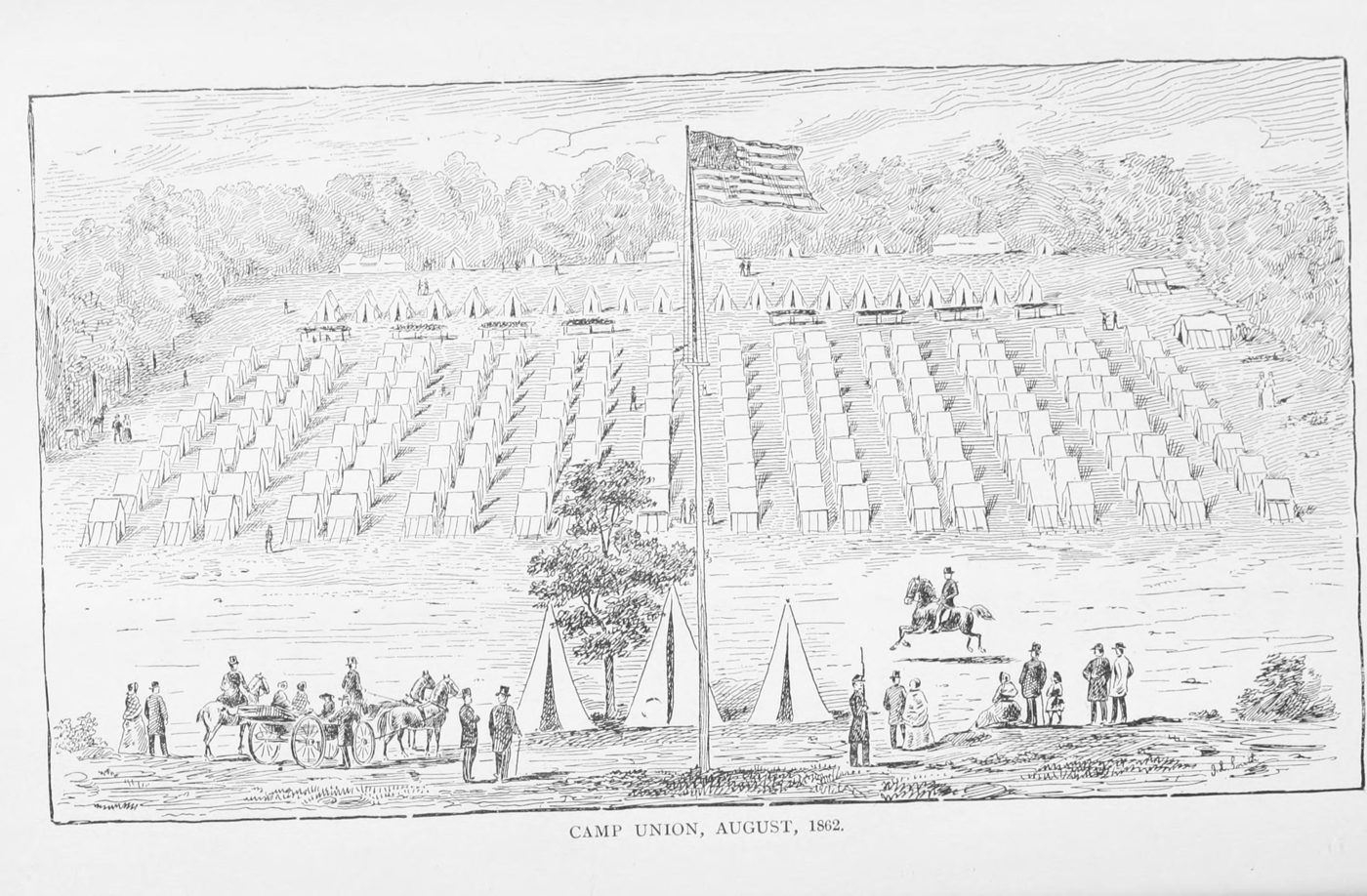
The Corn Exchange of Philadelphia, the city's grain merchants, resolved on 27 July 1862 to raise a regiment. The men trained at Camp Union on Indian Queen Lane by the Falls of Schuylkill and were mustered in on 30 August, each with a $10 bounty from the Exchange DOCUMENTED. On 12 September they joined Barnes's brigade of Porter's V Corps, and at Antietam on the 17th they waited in reserve DOCUMENTED (Bates III p.1310). Confederates later jeered them as the "$200 boys from Philadelphia" (1888 history p.71) DOCUMENTED.
The ford and the bluff
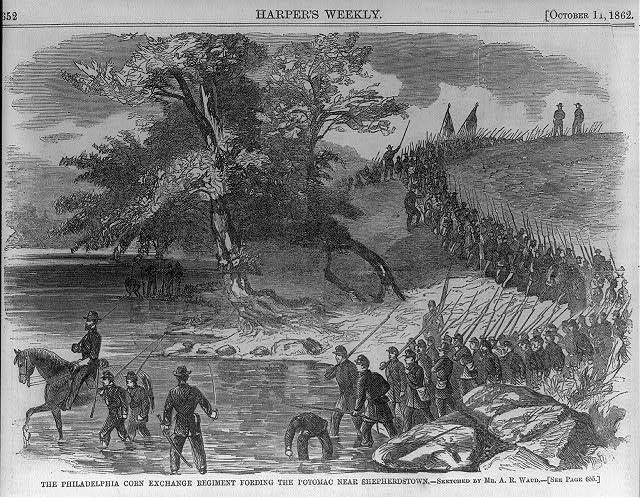
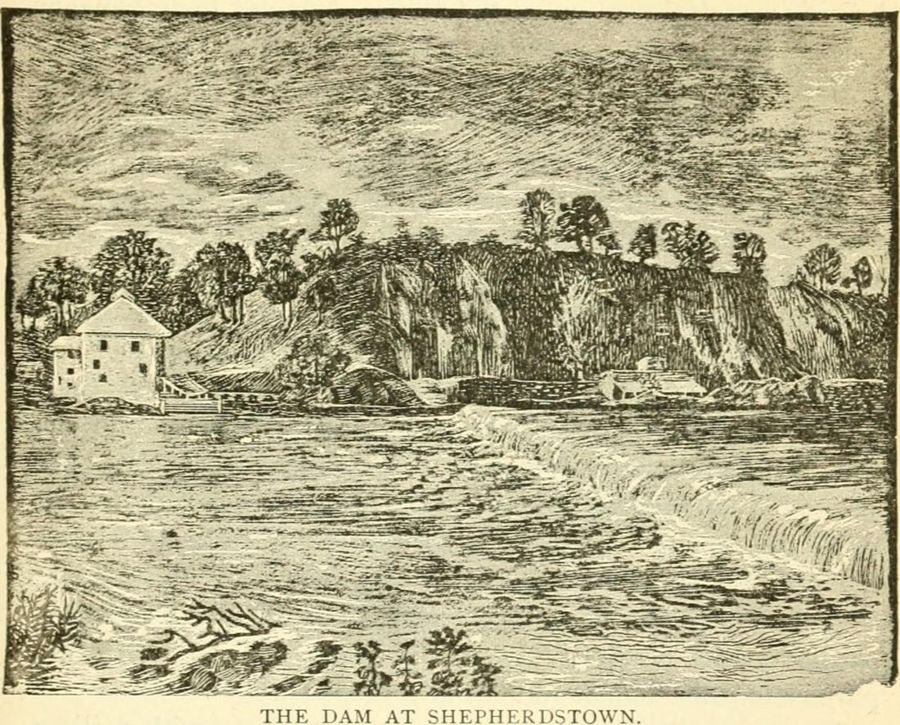
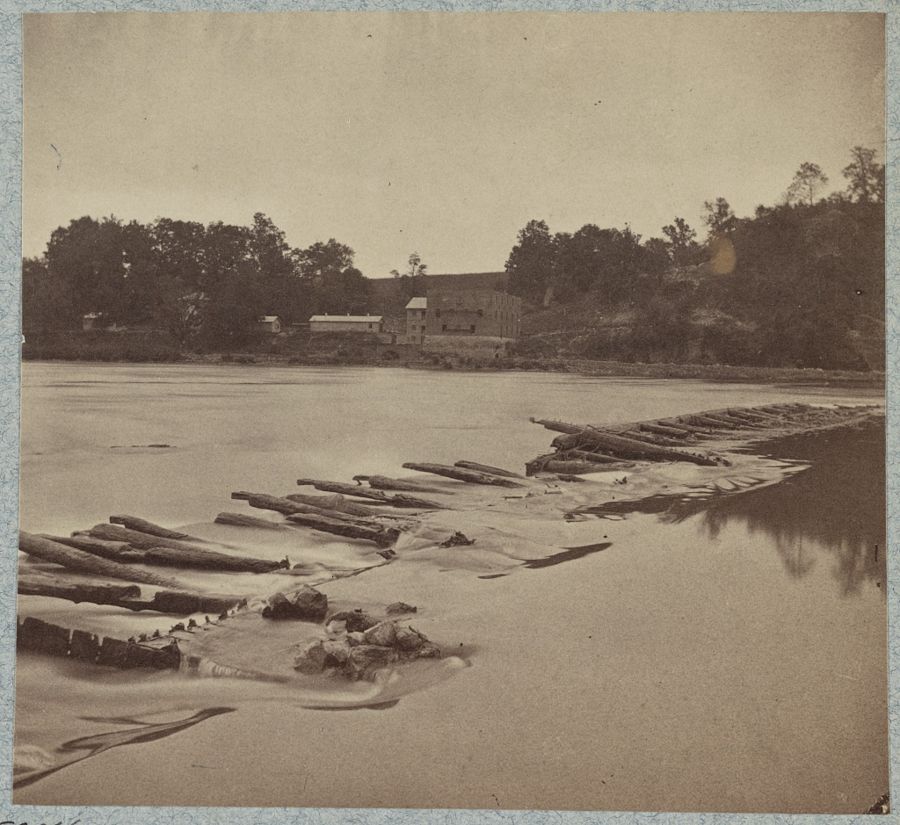
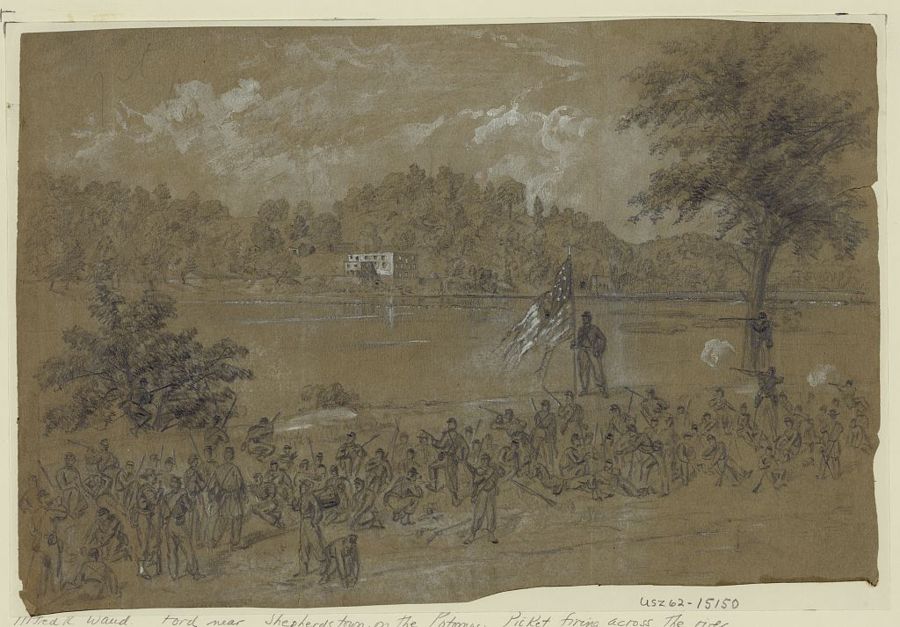
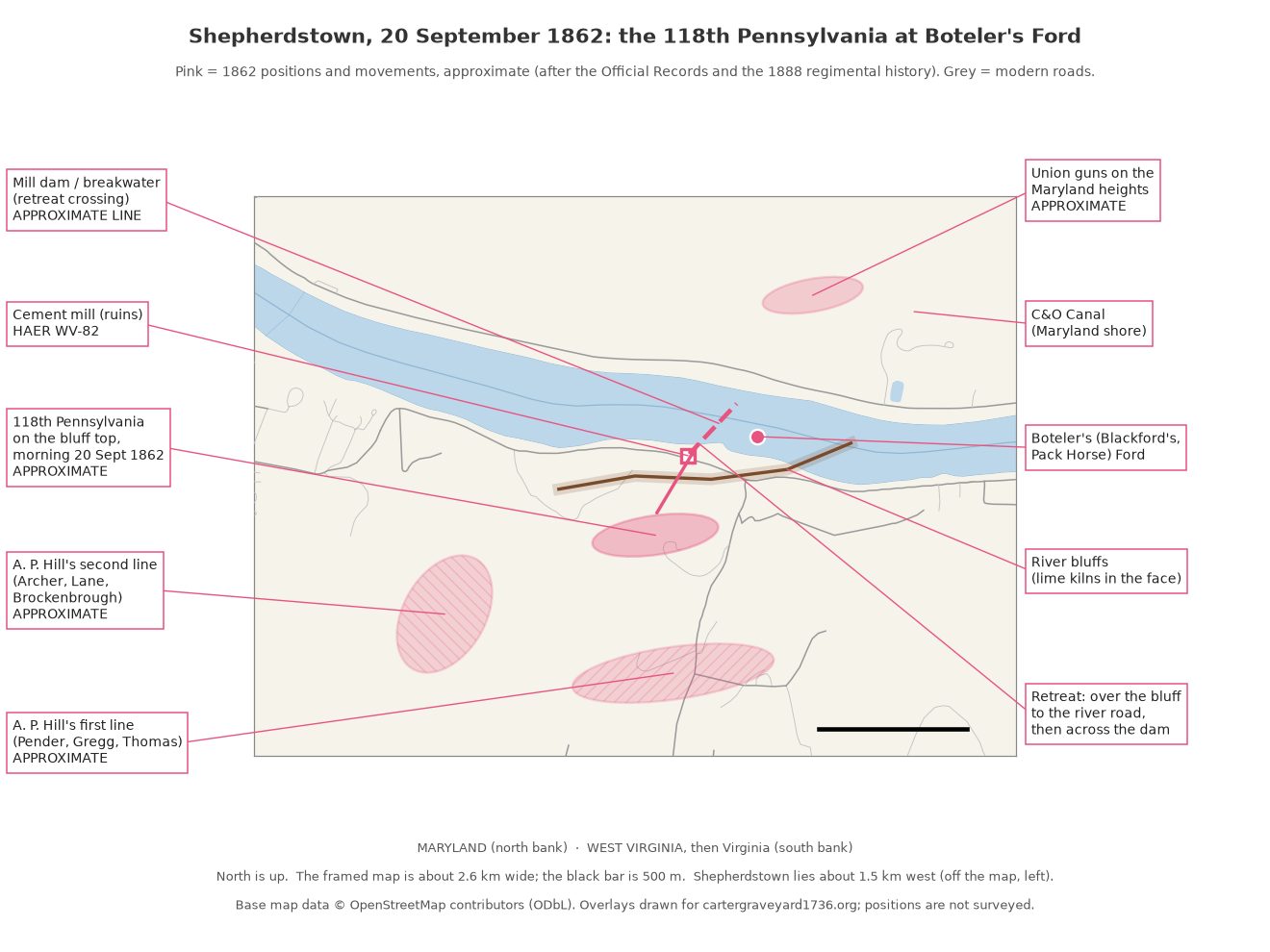
On the morning of 20 September Barnes's brigade, 1,711 men, waded Boteler's Ford, which the reports call Blackford's Ford, about a mile and a half below Shepherdstown DOCUMENTED (OR, Barnes p.346). The 118th, 737 strong, crossed about 8 a.m. (Gwyn p.348). Beside the ford stood a cement mill and its dam. The regimental history describes the "dam-breast, some ten feet wide" coated in "slippery green slime", lime kilns built into the face of the bluff, and an "old abandoned mill" (p.54) DOCUMENTED. Of Barnes's regiments, only the 118th reached the top of the bluff (p.56) DOCUMENTED.
The rifles that would not fire
The regiment carried Enfield rifles, and its own officers said many would not fire. Lt. Col. Gwyn reported that "not more than 50 per cent." could be discharged (OR p.348). Colonel Prevost, as quoted in the regimental history, put it at "quite one-fourth of them would not explode the caps" (p.62). The two accounts conflict over how many failed, but both agree the guns were bad DOCUMENTED. General Porter called them "spurious Enfield rifles" and added that the defect "had been reported to the General-in-Chief, but all efforts to replace them had failed" (OR p.340) DOCUMENTED. Men who did not notice the misfires kept loading "until they nearly filled the piece to the muzzle" (1888 history p.61) DOCUMENTED.
Why did they fail? A modern presentation attributed on its slide to a gunsmith named Eric Johnson argues that over-hardened mainsprings made the hammer fall and crush the cone (the nipple that holds the cap). The American Battlefield Trust likewise speaks of "defective mainsprings" that "could not strike hard enough to pop the percussion caps". No 1862 source names the mainspring. The regimental history's "too weak to explode the cap" fits a faulty spring, and Private Meehan of Co. A wrote "I had broken the nipple of my gun", which fits a crushed cone. The explanation is plausible but modern HYPOTHESIS. The explanation comes from the Eric Johnson segment of the YouTube video "1862-68 Battle of Shepherdstown September 19-20, 1862" (Things You Should Know, c. 2020), a modern interpretation; the Eric Johnson shown may be the Shepherdstown-area blacksmith of Southwood Farm Forge HYPOTHESIS.
The order
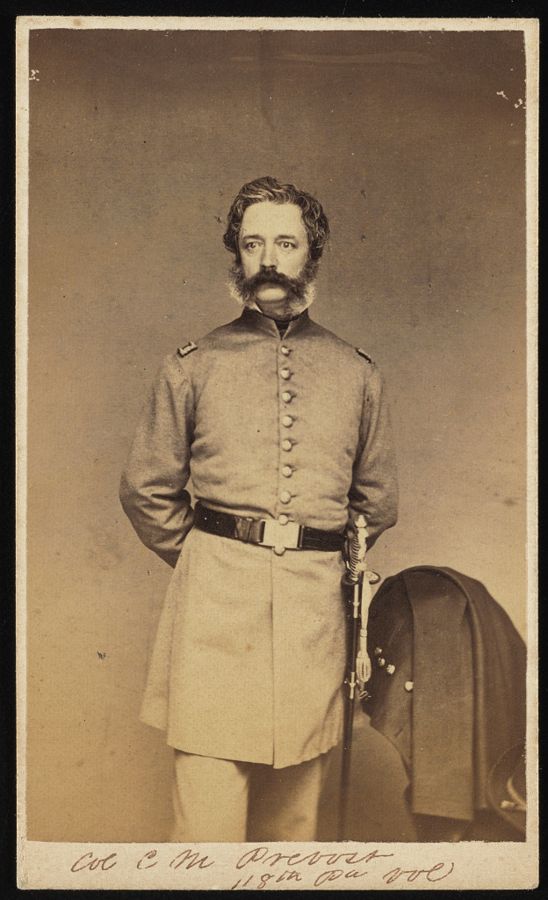
As A. P. Hill's division came on in two lines, Barnes ordered his brigade back across the river. The order reached Prevost second-hand, and he refused it: "I do not receive orders in that way… if Colonel Barnes has any order to give me, let his aid come to me" (1888 history pp.60–61) DOCUMENTED. When the centre wavered he took the colours himself and was shot, a musket ball shattering his shoulder blade (p.63). Barnes met him "disabled by a severe wound in the shoulder" (OR p.346) DOCUMENTED.
The slaughter on the bluff and the river
The regiment broke for the only way out, down the face of the bluff. Men slid down a ravine past a fallen tree with "bodies suspended from the branches" (p.67) and crowded into the kiln arches, where Union shells from the Maryland side, falling short, tore "to pieces ten or twelve" of their own men (p.68) DOCUMENTED. Captain Ricketts cried, "My God! I am shot by my own men" (p.65). From the river road they crossed on the narrow dam while Confederates fired down from the summit (Gwyn, OR p.349) DOCUMENTED. Meehan saw the dam "contained many dead and wounded men" and passed one man "completely under water" (pp.81–85). Major Herring and Private William Hummell saved the colours (p.68) DOCUMENTED. Hill wrote that "the broad surface of the Potomac was blue with the floating bodies of our foe" (OR p.982). DOCUMENTED Barnes's whole brigade lost 92 killed, 131 wounded and 103 missing (OR p.347) DOCUMENTED. No primary source counts the drowned.
The map
The day, hour by hour
| When | What happened | Label | Source |
|---|---|---|---|
| 27 Jul 1862 | The Corn Exchange of Philadelphia resolves to raise a regiment; camp at Camp Union, Indian Queen Lane, Falls of Schuylkill. | DOCUMENTED | 1888 history ch. I |
| 14 Aug 1862 | Samuel Phillips enlists, private, Co. A, for three years. | SUPPORTED | Bates III p.1319; 1888 roster |
| 30 Aug 1862 | The 118th is mustered in; the Corn Exchange pays each man a $10 bounty. | DOCUMENTED | 1888 history; Bates p.1310 |
| 12 Sep 1862 | Assigned to Barnes's 1st Brigade, Morell's 1st Division, Porter's V Corps. | DOCUMENTED | Bates p.1310 |
| 17 Sep 1862 | Antietam: the 118th is held in reserve and does not fight. | DOCUMENTED | Bates p.1310 |
| 19 Sep 1862 | Lee's army recrosses the Potomac at Boteler's Ford; Union troops cross that night and take guns on the Virginia side. | SUPPORTED | OR 19/1, Porter p.339 |
| 20 Sep, about 8–9 a.m. | Barnes's brigade, 1,711 men, fords at 'Blackford's Ford'; the 118th, 737 men, climbs the bluff. | DOCUMENTED | OR: Barnes p.346; Gwyn p.348 |
| 20 Sep, morning | A. P. Hill attacks in two lines. The order to withdraw reaches Prevost second-hand and he refuses it. Many rifles will not fire. | DOCUMENTED | OR: Hill p.981; 1888 history pp.60–62 |
| 20 Sep, late morning | Prevost, carrying the colours, is shot through the shoulder. The line breaks over the bluff, down to the river road and across the mill dam under fire. | DOCUMENTED | 1888 history p.63; OR: Gwyn p.348 |
| 20 Sep 1862 | Samuel Phillips is killed. The dead are left on the field. | SUPPORTED | Bates pp.1311, 1319 |
| days after | Lt Crocker and Dr Joseph Thomas cross under a flag of truce to recover the dead and wounded. | DOCUMENTED | 1888 history pp.76, 85–86 |
| later | Samuel Phillips is buried in Antietam National Cemetery, Pennsylvania section, grave 3590. | DOCUMENTED | Headstone; cemetery list |
In their own words
Capt. Francis Adams Donaldson, Co. H, 118th Pennsylvania (‘Corn Exchange’), crossing the dam, 20 September 1862
Donaldson’s letters, in J. Gregory Acken, ed., Inside the Army of the Potomac (Stackpole Books, 1998); wording as quoted by the Shepherdstown Battlefield Preservation Association. Rank: captain of Co. H from 19 Aug 1862 (Bates III p.1331) DOCUMENTED (eyewitness account)“I shall never forget the scene as I worked my way across the dreadful causeway. The bullets struck all around me, men were shot in various places of the body, some falling, others again staggering and struggling to make the other side, and all hurrying wildly on with the consciousness of the desperate chances they were taking. When nearly midway across, one poor fellow just ahead was shot, and in falling rolled over and over. As I came up to where he was lying, he clutched the tail of my overcoat, and in piteous accents called out, ‘Help me Captain, for God’s sake don’t leave me here.’ Without stopping, I unfastened the overcoat from around my neck and left it in his death grip, saying I couldn’t help him then, but would send after him as soon as I got across. I pushed on, but the poor fellow’s soul had reached the presence of the Great Commander before I got to the other side.”
Lt. Col. James Gwyn, 118th P.V., report of 30 Sept 1862
OR I/19/1 p.348Owing to the worthlessness of our pieces (condemned Enfield), not more than 50 per cent. of which could be discharged, the line began to waver, when Colonel Prevost advanced with the colors to the front, and was almost immediately severely wounded
Gwyn, on the retreat
OR I/19/1 pp.348–349Our only way of retreat was over the bluff, and it was very precipitous… On getting on the road under the bluff, we were immediately fired on by the enemy from the summit, with great effect. The regiment crossed at the dam opposite the ferry under a galling fire
Maj. Gen. Fitz John Porter
OR I/19/1 p.340Their arms (spurious Enfield rifles) were so defective that little injury could be inflicted by them upon the enemy.
Col. Charles M. Prevost, refusing the relayed order
1888 history pp.60–61I do not receive orders in that way… if Colonel Barnes has any order to give me, let his aid come to me.
Pvt Joseph Meehan, Co. A (Samuel's company)
1888 history pp.61–62I had broken the nipple of my gun… I felt that I would give all the world to be able to shoot the advancing foe
Meehan, at the river
1888 history pp.81–85A breakwater ran across the river near us, and it contained many dead and wounded men
Regimental history (1888)
1888 history p.61Some of the weapons were too weak to explode the cap… cartridge after cartridge was rammed into the barrel under the belief that each had been discharged, until they nearly filled the piece to the muzzle.
Maj. Gen. A. P. Hill (Confederate)
OR I/19/1 p.981the most tremendous fire of artillery I ever saw
Brig. Gen. W. D. Pender (Confederate)
OR I/19/1 p.1005driving them headlong into the river
Samuel's record
Bates's roster of Company A reads: "Phillips, Samuel… Private, Aug. 14, '62, 3 [yrs]. Killed at Shepherdstown, W. Va., Sept. 20, '62 — buried in National Cemetery, Antietam, Md., section 26, lot A, grave, 9" (Bates III p.1319) SUPPORTED. The 1888 regimental roster says the same, and Potts (1883, p.169) calls him a "member of Co. A, 118th Reg. P. V." Corporal James G. Wilson of his company, whose leg was torn off by a shell in the kiln arches according to Meehan, lies three graves away (no. 3606).
| Question | What we found | Label |
|---|---|---|
| Company | A (Bates; 1888 roster; Potts p.169). | SUPPORTED |
| Date | Killed 20 Sept 1862 (Bates III p.1319). | SUPPORTED |
| Killed or died of wounds | "Killed" in both rosters | SUPPORTED |
| Grave | 3590, Antietam National Cemetery, PA section (headstone). Bates's "sec. 26, lot A, grave 9" is probably the older numbering for the same grave. | DOCUMENTED / HYPOTHESIS |
| "Removed: Frederick" on the cemetery list | Unexplained. It may be a list quirk or a reburial by way of Frederick. | HYPOTHESIS |
| Home county when he enlisted | Not recorded in the rosters | HYPOTHESIS |
The cost
| Source | 118th casualties | Label |
|---|---|---|
| Bates (1870) | 64 killed, 124 wounded, 94 missing = 282, 'out of about eight hundred, who crossed the river' | SUPPORTED |
| Lt. Col. Gwyn (OR, 30 Sept 1862) | 277 of 737 | SUPPORTED |
| American Battlefield Trust (secondary) | 3 officers and 60 men killed, 101 wounded, 105 missing = 269 | SUPPORTED |
| Col. Barnes (OR), whole brigade | 92 killed, 131 wounded, 103 missing | DOCUMENTED |
| A. P. Hill's own loss (OR p.982) | 30 killed, 231 wounded | DOCUMENTED |
Every count puts the loss at about 270–280 men, more than a third of the regiment, in its first fight. Bates adds that "all the dead were left upon the field" DOCUMENTED. Days later Lt Crocker and the surgeon Dr Joseph Thomas crossed under a flag of truce and found the dead on the dam (1888 history pp.76, 85–86) DOCUMENTED.
His grave at Antietam
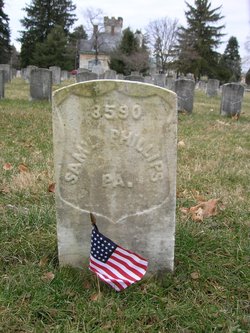
Samuel lies in the Pennsylvania section of Antietam National Cemetery, grave 3590, in the same row as other men of the 118th who died at Shepherdstown. See also Allied Families: Phillips.
Sources
14 sources
- Acken, J. Gregory, ed., Inside the Army of the Potomac: The Civil War Experience of Captain Francis Adams Donaldson (Mechanicsburg, PA: Stackpole Books, 1998). Letters of Capt. Francis Adams Donaldson, 118th Pennsylvania; page for the Shepherdstown dam passage not yet verified.
- Shepherdstown Battlefield Preservation Association, "Witness to the Battle", https://shepherdstownbattlefield.org/witness-to-the-battle/ (read 31 Oct 2026); full Donaldson passage.
- Bates, Samuel P., History of Pennsylvania Volunteers, 1861–5, vol. III (Harrisburg, 1870), pp.1309–1320, 1331 (Internet Archive historyofpennsyl03bate).
- Survivors' Association, History of the Corn Exchange Regiment, 118th Pennsylvania Volunteers (Philadelphia: J. L. Smith, 1888), ch. III pp.53–86 and the Co. A roster (Internet Archive historyofcornexc00unit).
- War of the Rebellion: Official Records, Series I, vol. 19, part 1 (1887): Porter pp.339–340; Barnes pp.345–348; Gwyn pp.348–349; A. P. Hill pp.981–982; Pender pp.1004–1005 (Internet Archive warofrebellion011901rootrich).
- Potts, Thomas Maxwell, Bi-Centenary Memorial of Jeremiah Carter (1883), p.169.
- Antietam National Cemetery burial list (NPS spreadsheet, 22 Dec 2020), grave 3590.
- Library of Congress Prints & Photographs: LC-DIG-ppmsca-21392 (Waud); LC-USZ62-46781 (Harper's Weekly, 11 Oct 1862); LC-DIG-ppmsca-35090 (Boteler's Ford); LOT 15158-1 no.3772 (Prevost).
- Historic American Engineering Record, HAER WV-82 (Potomac cement mill, Shepherdstown).
- Secondary: American Battlefield Trust, "Battle of Shepherdstown" (battlefields.org); Thomas A. McGrath, Shepherdstown: Last Clash of the Antietam Campaign (2007), not consulted directly.
- Secondary (modern interpretation, source of the mainspring explanation, Eric Johnson segment): Things You Should Know, "1862-68 Battle of Shepherdstown September 19-20, 1862", YouTube (c. 2020), youtube.com/watch?v=7dfKr8qZdrE.
- Secondary: Shepherdstown Battlefield Preservation Association, "Battle of Shepherdstown", shepherdstownbattlefield.org (read 31 Oct 2026).
- Plate: "Camp Union, August, 1862", History of the Corn Exchange Regiment (1888), between pp.8 and 9 (Internet Archive historyofcornexc00unit, leaf n37); public domain.
- Map data © OpenStreetMap contributors (ODbL).
Research notes: people/Samuel-Phillips-118th.md. Kevin's reference map and slides were used only as pointers and are not reproduced here.